Quick answer:
- Overheating is a traffic problem here, not a highway one.
- Pollen-packed radiators are a genuine local cause and easy to miss.
- A sealed cooling system should never need topping off. If it does, find the leak.
Why Traffic Is the Real Test
At highway speed, air is forced through your radiator whether or not anything is working correctly. That masks an enormous range of developing faults.
Sitting still on the Downtown Connector or I-285, the only thing moving air is the cooling fan. So a fan that has stopped working, a radiator packed with debris, a slightly low coolant level, or a water pump moving less than it should — none of which you would notice on GA-400 at speed — all surface at once on a July afternoon in stopped traffic.
This is why Atlanta drivers discover cooling problems in the worst possible circumstances, and why prevention here means thinking about idle performance rather than highway performance.
The Pollen Factor
This is the local cause most generic advice never mentions. Each spring, pollen mats into the fins of your radiator and A/C condenser, mixes with road grime and rain, and forms a blanket that restricts airflow.
The car does not complain in April, because it is 70 degrees and nothing is under strain. It complains in July, as A/C that goes warm in stop-and-go traffic and coolant temperatures that sit higher than they used to.
The fix is easy and worth doing after the heavy pollen ends in late April or May: rinse the radiator and condenser gently with plain water, directed from the engine side outward so debris exits the way it entered. Low pressure only — a pressure washer flattens the fins and makes the blockage permanent.
The Spring Checklist
None of this is complicated, and all of it is cheaper than an overheat:
- Check the coolant level when the engine is completely cold, at the overflow reservoir.
- Confirm the cooling fan actually runs. Let the engine idle until warm with the A/C on — the fan should cut in audibly.
- Squeeze the radiator hoses when cold. Rock-hard, mushy, or crunchy all mean replacement.
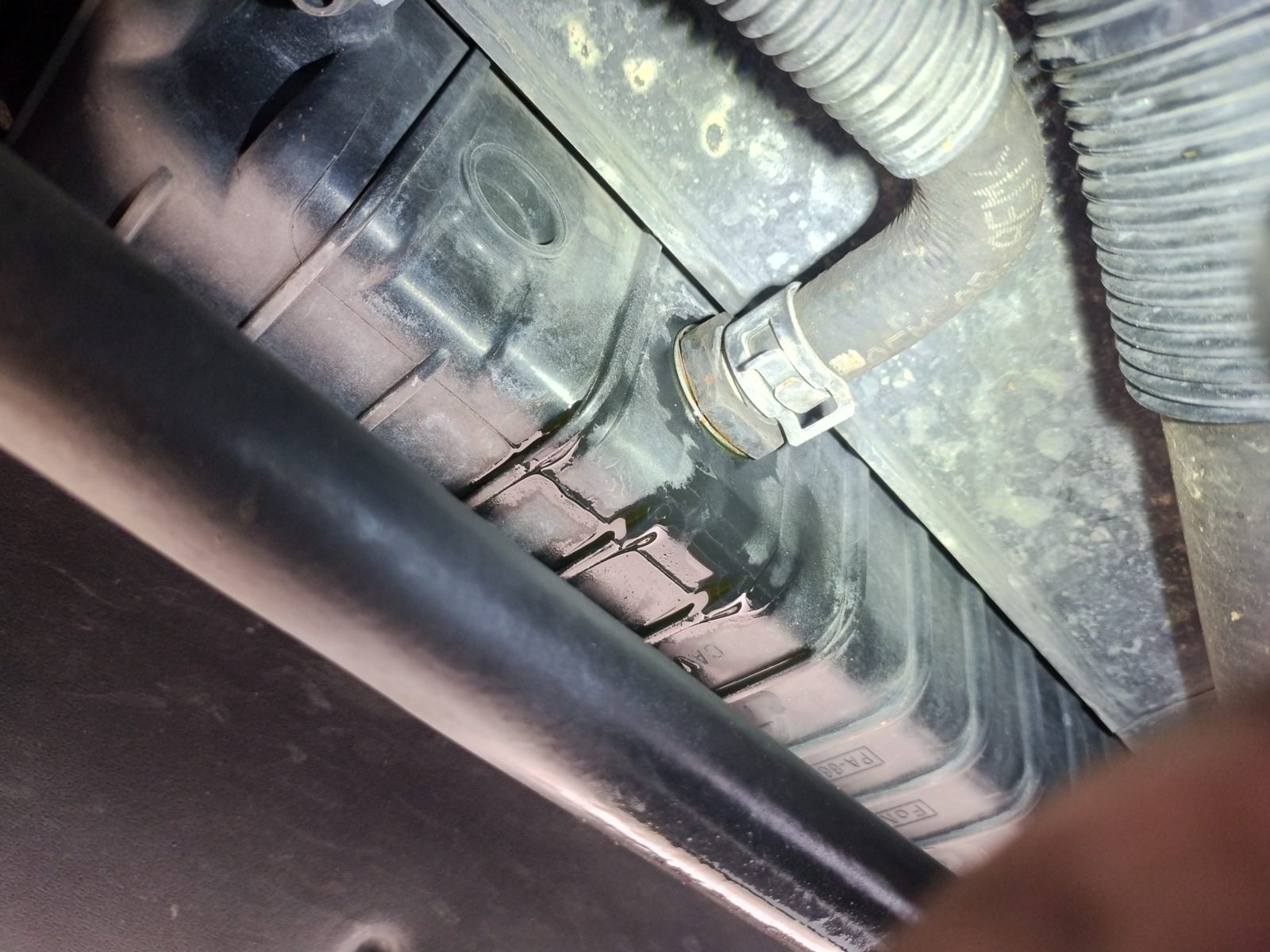
- Look for crusty white or coloured residue around hose clamps and the radiator — that is dried coolant marking a slow leak.
- Check the radiator cap. A cheap part that holds system pressure, and a failed one causes overheating on its own.
- Rinse the cooling stack after pollen season.
Do Not Ignore a Slow Leak
A sealed cooling system should not consume coolant. If you are topping it up every few weeks, coolant is going somewhere, and “somewhere” is either onto the ground or into the engine.
Slow leaks are also the cheapest possible stage to fix — a hose, a clamp, a cap, a thermostat housing. Left alone through an Atlanta summer, the same leak eventually drops the level far enough to cause an overheat, and an overheat can mean a warped head or a failed gasket. That is the difference between a modest bill and a very large one.
Topping off coolant, or running warmer than usual? Call (470) 460-6548 before summer finds it. We pressure-test the system at your home or office and locate where the coolant is actually going.
Frequently Asked Questions
Why does my car only run hot in traffic?
Airflow. At speed air is forced through the radiator regardless; at a standstill only the cooling fan moves it. Overheating exclusively in traffic points strongly at a failing fan, a blocked radiator or condenser, or a marginal water pump.
Can pollen really cause overheating?
On its own it rarely causes a full overheat, but a matted radiator and condenser meaningfully reduce airflow, which raises running temperatures and weakens A/C in traffic. On a car with a marginal cooling system it can be what tips it over.
How often should coolant be changed?
Follow your manufacturer's interval — it varies widely by coolant type and vehicle. What matters more day to day is that the level stays constant. A system that needs topping off has a leak.
Can I use water instead of coolant?
In a genuine emergency, to get somewhere safe. But water alone boils sooner, offers no corrosion protection, and no freeze protection. Have the proper mixture restored promptly.
Can you pressure-test the system at my house?
Yes. Pressure testing, leak location, thermostat and fan checks, and most hose and cap replacements are all straightforward on-site work.
Need a mobile mechanic in Atlanta? Call Atlanta Auto Repair Pro at (470) 460-6548 for fast, local, upfront-priced on-site service — or request service online. We come to you across the Atlanta metro.